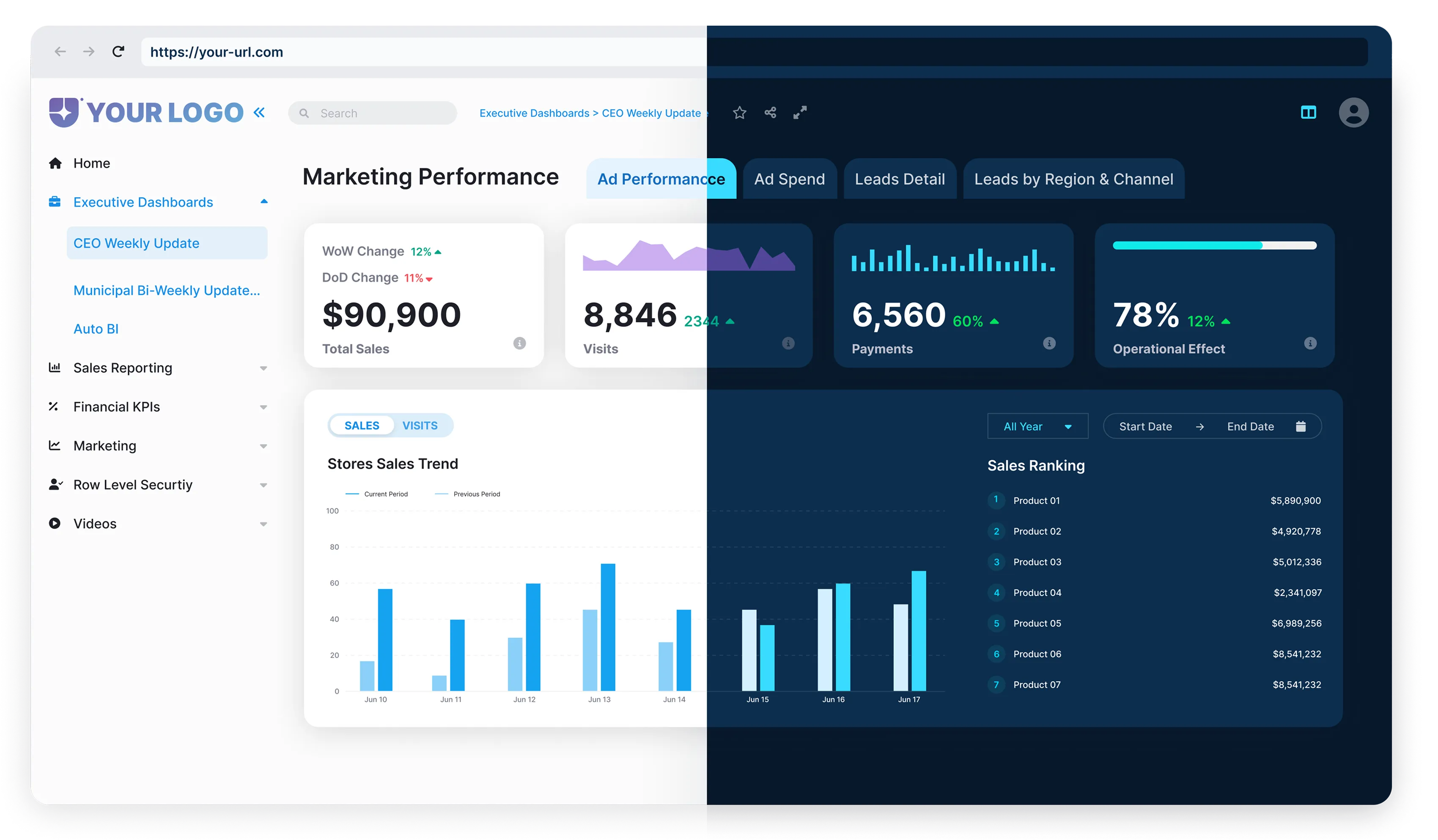



Role-based access control, or RBAC, is a straightforward method for managing access to resources based on an individual’s role within the organization. For example, a security analyst might be able to manage firewalls but can’t view customer data. Meanwhile, a sales representative can access customer accounts but cannot modify firewall settings.
Admins assign roles to users, and each role comes with its own set of permissions tied to that person’s responsibilities. Someone in finance might be allowed to make purchases, run forecasting reports, or use supply chain systems. An HR team member might have access to employee records and benefits tools.
Large organizations rely on RBAC to keep access simple and secure across hundreds or even thousands of users. Some even extend it to physical spaces like offices or data centers, using electronic locks.
But BI has changed. Dashboards aren’t just internal anymore; they’re embedded in customer-facing apps, shared across clients, and constantly updated. The old way of managing access with static roles no longer keeps up.

Let’s explore why that is and what a more modern approach to BI access control looks like.
What Role-Based Access Control Gets Right
RBAC still pulls its weight, especially in early-stage BI delivery platforms or white-label Power BI solutions. It helps:



RBAC is still a smart first layer. But as you scale your SaaS analytics product or manage dozens of tenants, rigid role structures start showing cracks. That’s when you need something more flexible.
Where Role-Based Access Control Starts to Show Its Limits
RBAC is great for basic access management, but it doesn’t always cut it in more complex BI setups. One big challenge is its limited granularity. It can’t easily control access at the row or column level inside your datasets. That means some users might see more data than they really should.
RBAC also struggles when things change fast. In today’s BI world, users switch roles, teams collaborate on the fly, and access needs can be temporary or very specific. Static roles just can’t keep up with all that. For businesses running white-label or SaaS BI platforms with multiple clients, RBAC doesn’t fully protect against data mixing between customers. This raises serious concerns about privacy and compliance.
This is where Power BI’s Row-Level Security (RLS) comes into play. RLS lets you apply filters inside your data models, so users see only the rows they’re allowed to see, like a sales rep viewing their own region’s data, but not others.

For DirectQuery, RLS filters are passed to the source system. Admins and contributors can still see more, so it’s not a total solution. Plus, setting up RLS can vary depending on whether your data is imported or live-connected.
-
 Import mode: Filters apply during data refresh
-
DirectQuery/Live Connection: Filters pass to the source system
-
Power BI datasets: Filters apply at query time
While RLS adds much-needed control, many companies find that RBAC plus RLS isn’t flexible enough for modern BI demands. To stay secure and scalable, it’s often necessary to combine these with more dynamic, tenant-aware access controls.
Security is key in Reporting Hub, which leverages Microsoft’s top-tier protections such as Multi-Factor Authentication and Row-Level Access Controls. These features guarantee that users only see the data they’re allowed to, while advanced permissions help administrators maintain strict access governance, ideal for multi-tenant and embedded BI solutions.
Secure Multi-Tenant BI with Row-Level Security and Attribute-Based Access in Power BI
As BI tools become more embedded, static roles may not suffice. While Power BI natively provides Row-Level Security (RLS) and Object-Level Security (OLS), some organizations implement custom Attribute-Based Access Control (ABAC) patterns through:
-
Azure AD claims mapping
-
Custom security tables in the data model
-
Third-party solutions
Power BI Embedded supports this shift with layered security options designed for scale:



Power BI’s multi-layered security approach gives ISVs and data teams the flexibility to scale without compromising security:
-
Smaller SaaS providers can use dynamic RLS on a single report.
-
Mid-sized ISVs serving enterprise clients can blend static/dynamic RLS with OLS.
-
Large platforms can go full multi-tenant with isolated workspaces and role-based data filters inside.

How Reporting Hub Simplifies Multi-Tenant Security?
Reporting Hub brings all these advanced Power BI security features into one streamlined, no-code platform designed specifically for multi-tenant BI reporting:



- What Role-Based Access Control Gets Right
- Where Role-Based Access Control Starts to Show Its Limits
- Secure Multi-Tenant BI with Row-Level Security and Attribute-Based Access in Power BI
- How Reporting Hub Simplifies Multi-Tenant Security?
.webp)
.webp)